
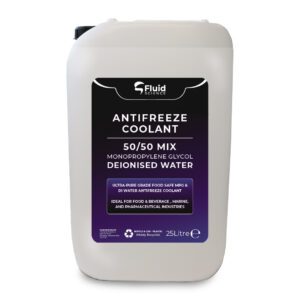
What is Antifreeze Coolant?
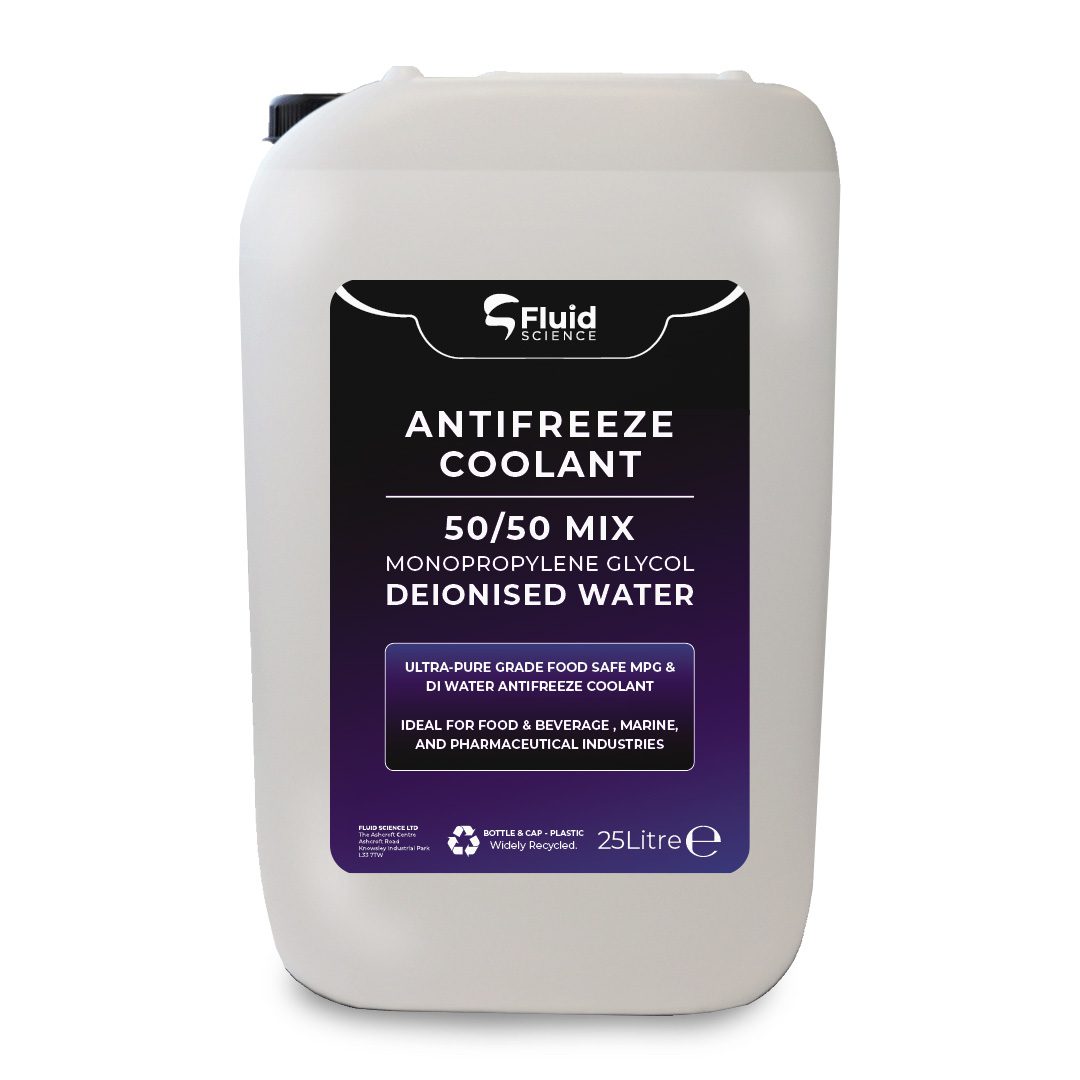
Fluid Science’s Antifreeze Coolant range is a selection of Heat Transfer and Antifreeze solutions. These are developed from a base product of either ethylene gylcol or propylene glycol. The benefit and dual-purpose nature of Glycol Coolant decreases the freezing point of liquid in a cooling system and increases the boiling temperature.
What do we offer?
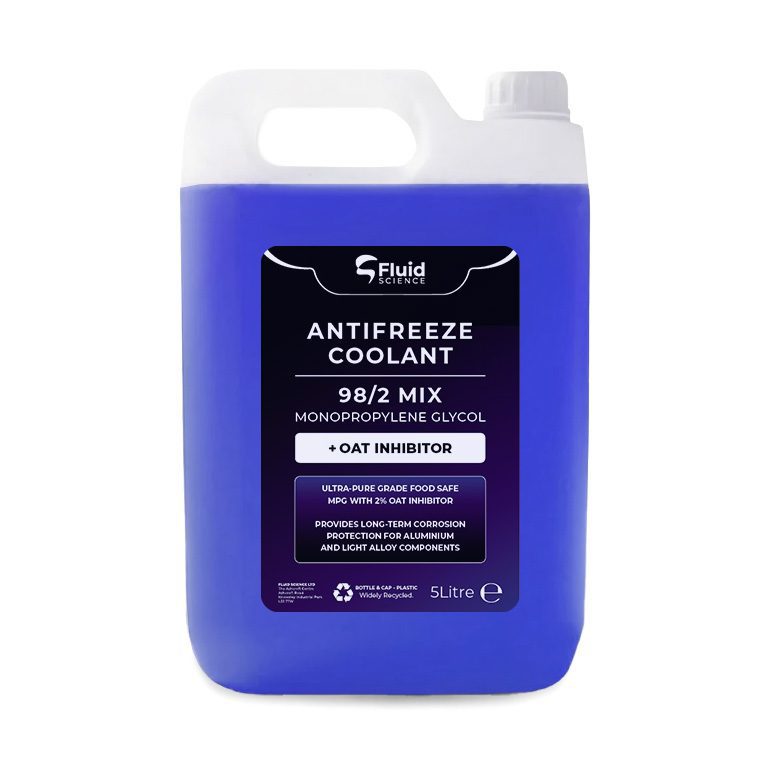
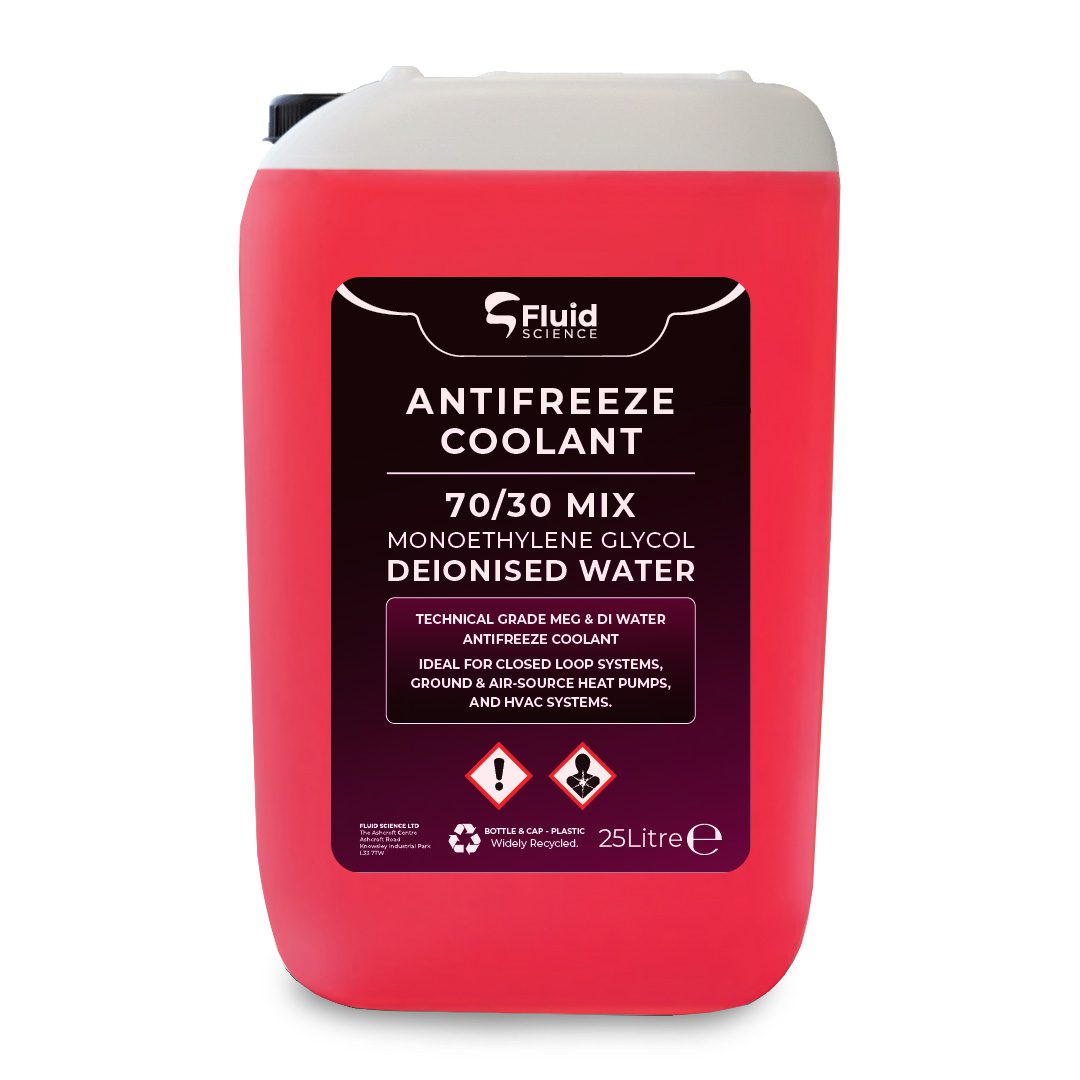
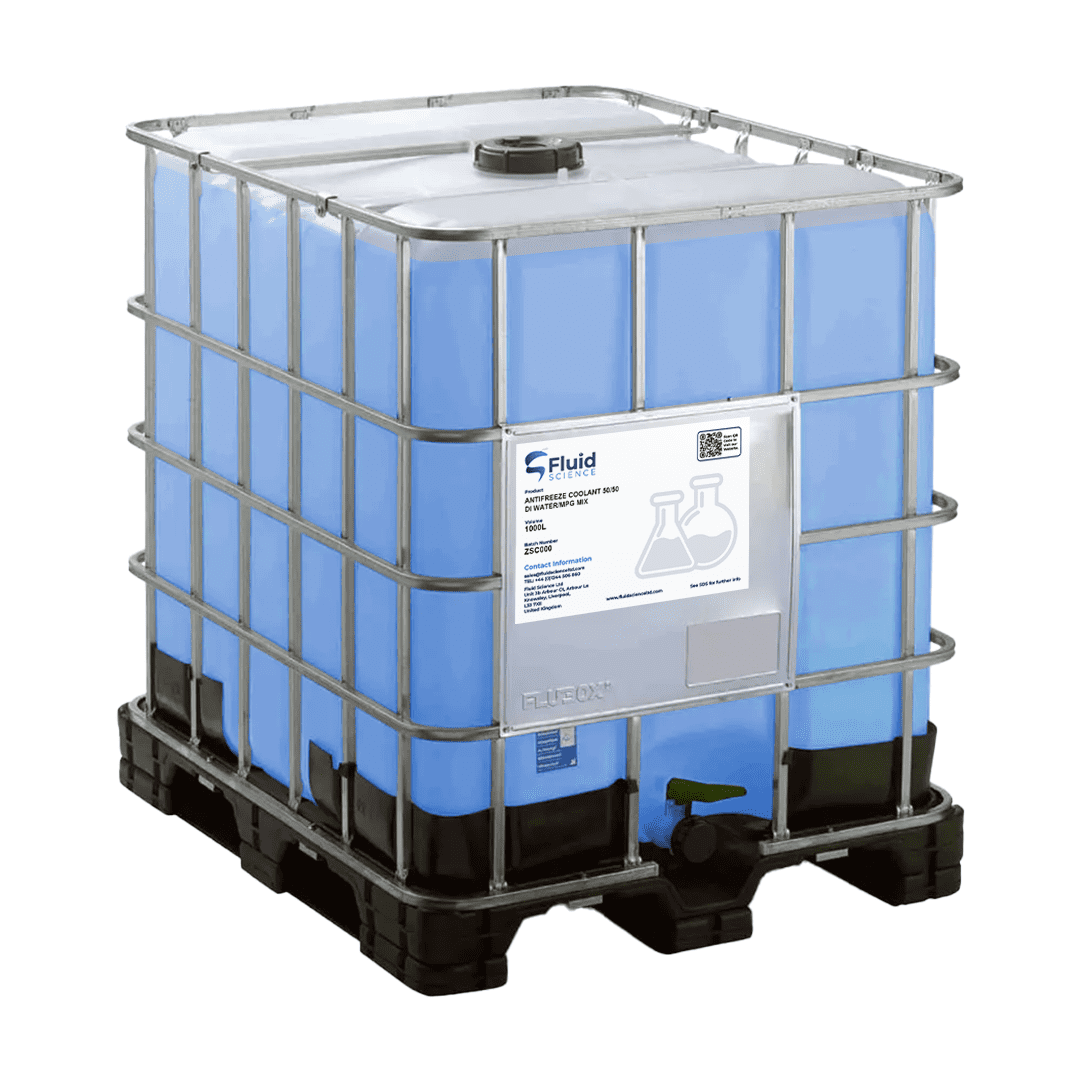
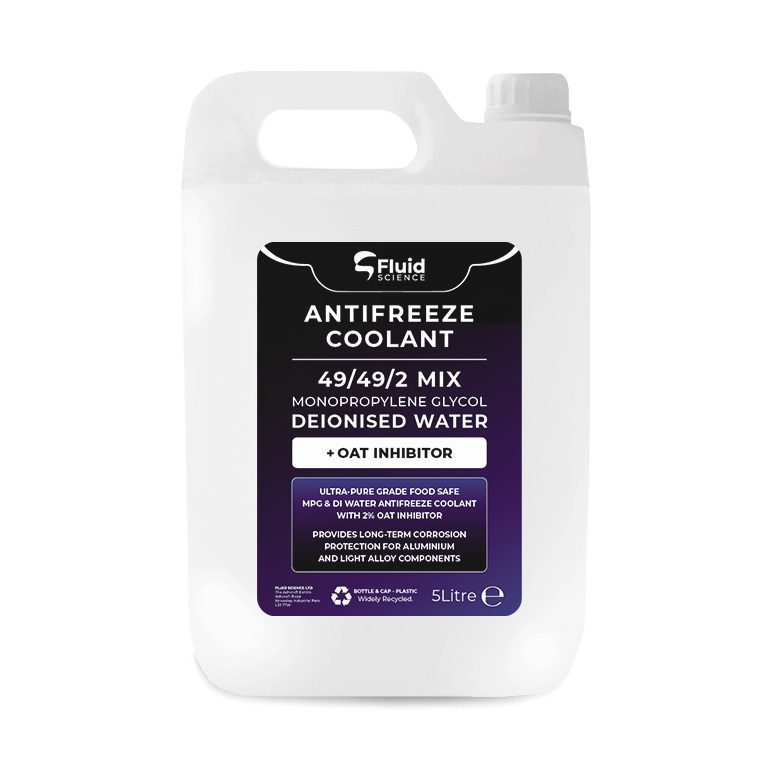
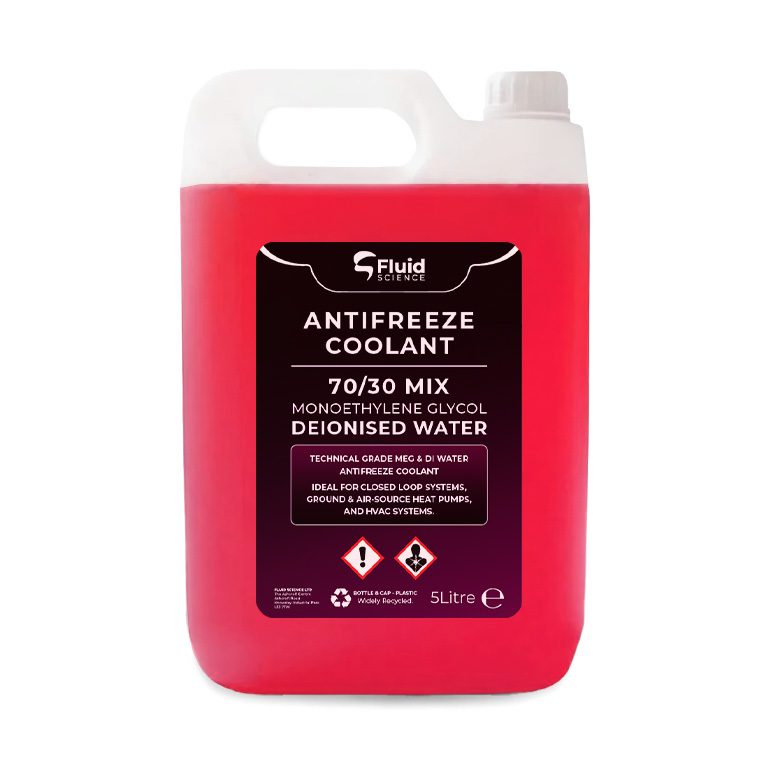
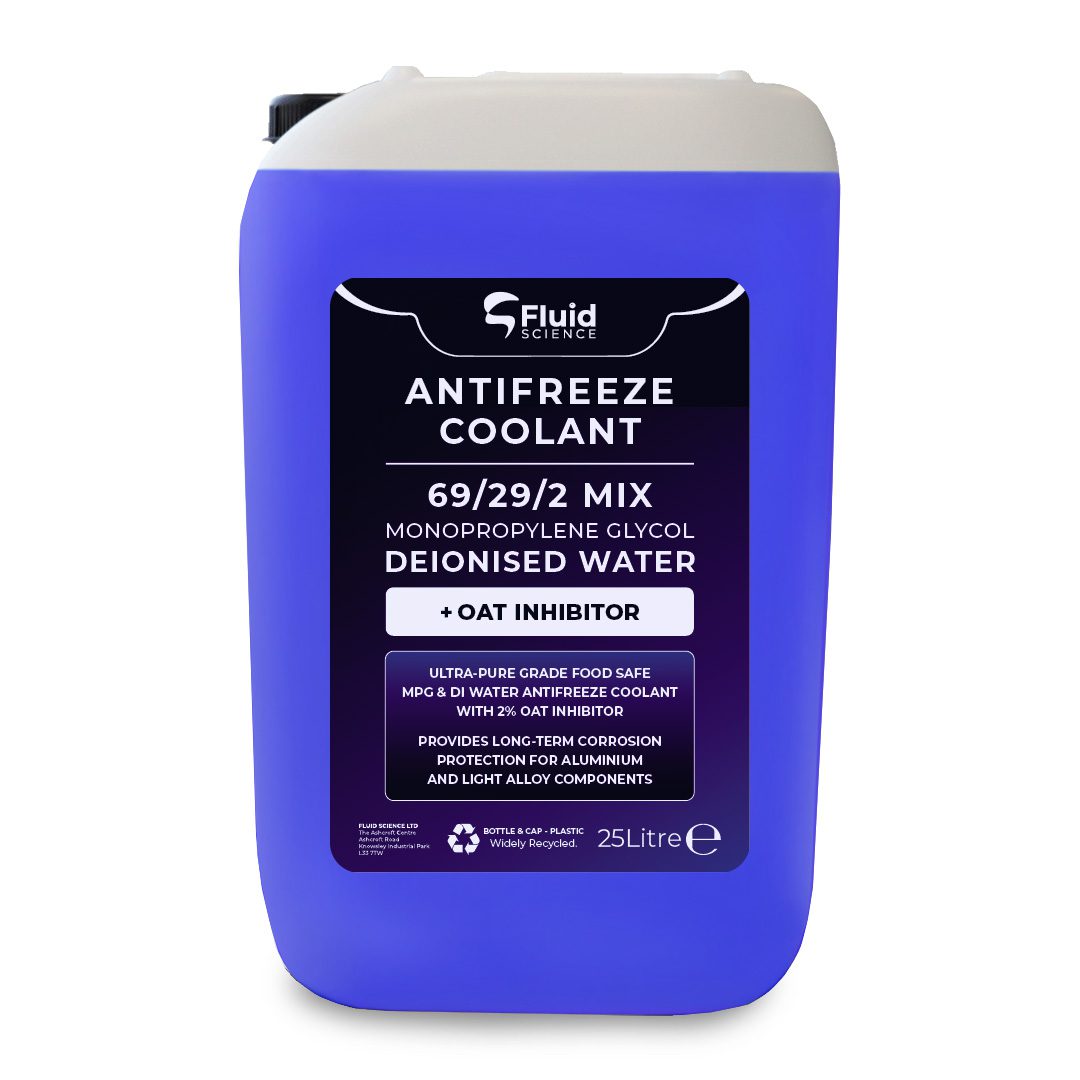
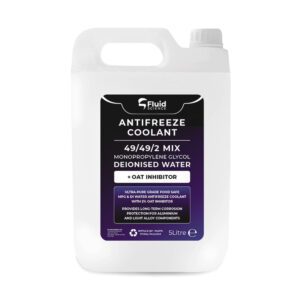
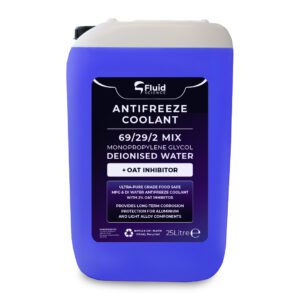
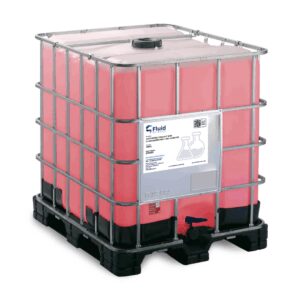
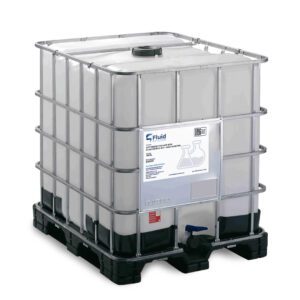
Our configurator allows customers to purchase 3 different specifications of coolant each with their own choice of glycol, concentration and even colour dye:
- Antifreeze Coolant – Glycol & Deionised Water Mix
- Inhibited Glycol – Glycol & OAT Inhibitor
- Inhibited Coolant – Glycol, Deionised Water & Inhibitor
Antifreeze solution keeps cooling systems running by eliminating the potential of icy build up during cold weather conditions. As well as a Coolant solution that prevents any over-heating issues. Manufacturers of Air Source Heat Pumps recommend the use of a glycol anti-freeze to prevent it from freezing up during the winter months. This will prevent any damage when water freezes and expands within the plate of the heat exchanger which could cause leaks and a broken heat pump. For water that comes into contact with people, a food safe Glycol like Monopropylene Glycol is perfect for use in this matter.
Propylene Glycol vs Ethylene Glycol
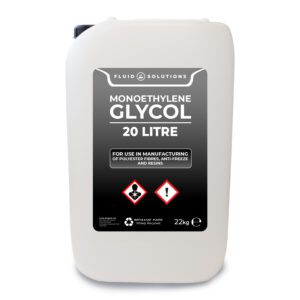
Fluid Science offers two different types of Glycol Coolant. Both glycols excel when primarily used in the production of Antifreeze.
Propylene Glycol has very low toxicity enabling it for use in cosmetics and personal care products. Whereas the toxicity of Ethylene requires you must handle it with caution. And restrict any human or animal exposure and ingestion to the poisonous substance. Propylene Glycol is more suitable in scenarios with human or animal contact points.
In closed loop systems where risk of contact with food is minimal, Ethylene Glycol Products are the preferred choice due to their excellent heat transfer properties thanks to lower viscosity. Ethylene is a highly preferred base fluid across the world. Thanks to its cost-effectiveness and its proficiency being used in all climatic conditions. Ethylene Glycol is widely used in industrial cooling applications.
Each glycol has its own property advantages such as freezing and boiling points within Antifreeze Coolants. The graph below shows the effectiveness of each Glycol when mixed in different concentrations with Deionised Water.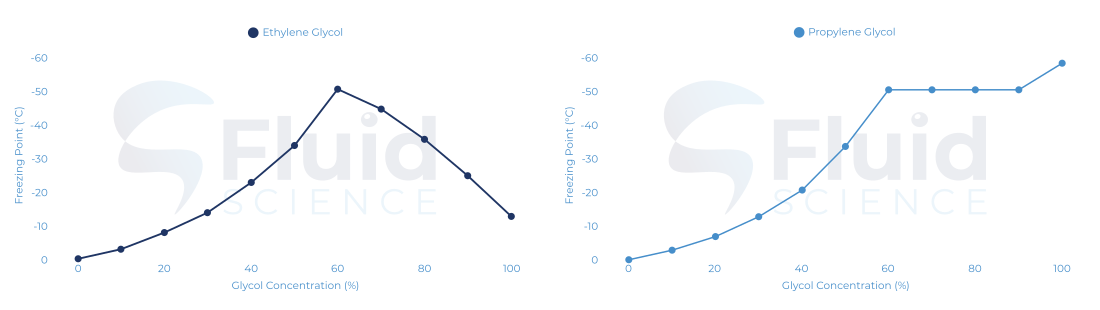
Why use Deionised Water?
Fluid Science are UK Leaders in the production of Deionised Water thanks to its industry experience. The use of Deionised Water in our Coolants and Antifreeze solutions enhances the anti-corrosion and effectiveness of the mix. This is due to its high purity. It is water that has had most of its mineral ions removed, such as cations like sodium, calcium, iron, and copper, with anions such as chloride and sulfate. This strengthens our Coolants effectiveness and ensures your systems operate to their fullest potentials.
What is an OAT Coolant? What is a OAT Inhibitor used for?
OAT (Organic Acid Technology) coolants provide long-term corrosion protection for aluminium and light alloy components. When paired with an effective Glycol, this helps maintain the optimal operating temperature by transferring and absorbing heat. OAT coolants are a contemporary type of antifreeze, formulated with organic acid-based inhibitors.
Advantages of Inhibitor Coolants…
Corrosion Protection: OAT Inhibitors create a protective film on inner surfaces of the cooling system, this helps prevent corrosion.
Long Life: OAT Inhibitors help extend service intervals, allowing for less downtime and servicing of your system.
Environmental Friendliness: Organic inhibitors are considered more environmentally friendly due to their less toxic formulations compared against older IATs.
Glycol Compatibility: OAT Coolants are enhanced when mixed with temperature regulating Glycols: Ethylene and Propylene Glycol.
Trusting Fluid Science
At Fluid Science, we produce and source the highest quality products, including high purity deionised water, fine/trade chemicals, and buffer solutions; both standard and bespoke, for the cosmetic, food & beverage, diagnostic and Pharmaceutical industries. Quality, innovation, sustainability and customer experience are central to everything we do. Our dedication to building customer relationships based on our core values of service, trust and reliability helps support our customers’ success.
We are specialists in liquid solutions for industry. Our expertise in Antifreeze Coolants shows our commitement to becoming the trusted supplier in the industries we serve. We understand that your business is always moving swiftly, and you may need your supply urgently. With our sourcing and manufacturing agility, underpinned by our passion for collaboration, value creation and a commitment to excellence, we aim to become the preferred partner for our customers. If you ever need information on our products or have any questions? just use the Live Chat function while on the website, send us an email or simply give us a call. We are here to help.
Antifreeze Coolant Product Documentation
Inhibited Glycol (Glycol & Inhibitor): MEG 98/2 SDS | MPG 98/2 SDS
Antifreeze Coolant (Glycol & Deionised Water): MEG 30/70 SDS | MEG 50/50 SDS | MPG 30/70 SDS | MPG 50/50 SDS
Antifreeze Coolant (Glycol & Deionised Water & Inhibitor): MEG 29/69/2 SDS | MEG 49/49/2 SDS | MPG 29/69/2 SDS | MPG 49/49/2 SDS